
Setting the Scene
Vitamins and nutrition have been known to be important for a very long time. Fortification of salt with iodine began in the USA shortly after the end of the first world war, and it was 1938 when vitamin B3 started being added to bread.
In 1965, an American researcher working out of South Africa published research into Vitamin E. The research suggested that Vitamin E could be beneficial in doses of 300iu. Researchers had only conducted notable research into Vitamin E with very small doses at this point.
How Did G&G Start?
David and Sheila Gaiman, husband and wife, founded G&G. Seeing the research into Vitamin E, Sheila was determined to make it available to those in need. As a founding member of the British Pharmaceutical Society, she was always fascinated by new vitamins and how they could help people. David was an entrepreneurial property developer, and knew a business opportunity when he saw one.
David approached Robert Woodward, of Larkhall Laboratories. Robert agreed to manufacture the Vitamin E, and David and Sheila began taking mail orders for it from their garage. Sales took off almost immediately, and it wasn’t long before David had to employ some help. Sadly a few years later the neighbours had had enough of all the comings and goings. They complained that running a business from the garage was not in keeping with the houses planning consent. David found his first premises out of necessity.
The first shop was on the East Grinstead high street, and was called “Naturally Good”. They sold vitamins, along with health foods and local baked goods. A few years later they moved to larger premises in the town.
David went on releasing new products. He released “Cal-M” in 1981, and it became a major hit. Between 1981 and 1985 the business turnover increased 20x, forcing yet another premises change. Now with 30 staff, they made the move to a much larger building on London Road.
A History of Quality
It was in the 80s that the problem with excipients really started to become understood. Until then it had been quite normal to fill capsules or tablets with synthetic fillers and flow agents, the vitamins themselves getting just a small percentage of the space. Flow agents had to be removed to fit bigger doses of vitamins in.
Scaling Up
G&G used small, hand operated machines for the first in-house encapsulation. Each operator could produce 3000 capsules per day. The system worked, but 3000 capsules per person just was not enough.
Jeremy Stephens’ worked on speaking with companies to find an appropriate machine.
“We went to find a machine that could do the job. We went to Eli Lilly and they laughed and said it couldn’t be done. They said it was just not possible to do this with vitamins.
“We were leaving the factory, rather disappointed, and as we walked down a corridor I glanced into one room and there was an old noisy machine which looked to operate differently to the others. It looked like it might just do what we needed. I asked what it was and was told it was just an old machine, not made any more and essentially obsolete.
“But I said that is the machine we want. They thought about it, and they remembered they knew somebody in Wales and, just possibly, there was another of the machines down there in an old warehouse.
“The next day we drove down to Wales and we bought the machine for £1500.”
Over the next few years, G&G went on to develop the “TruFil®” system. This method of encapsulation allowed vitamins without fillers or excipients. With this now unique method of filling capsules, business continued to go from strength to strength, and in the early 90s G&G had once again outgrown its premises.
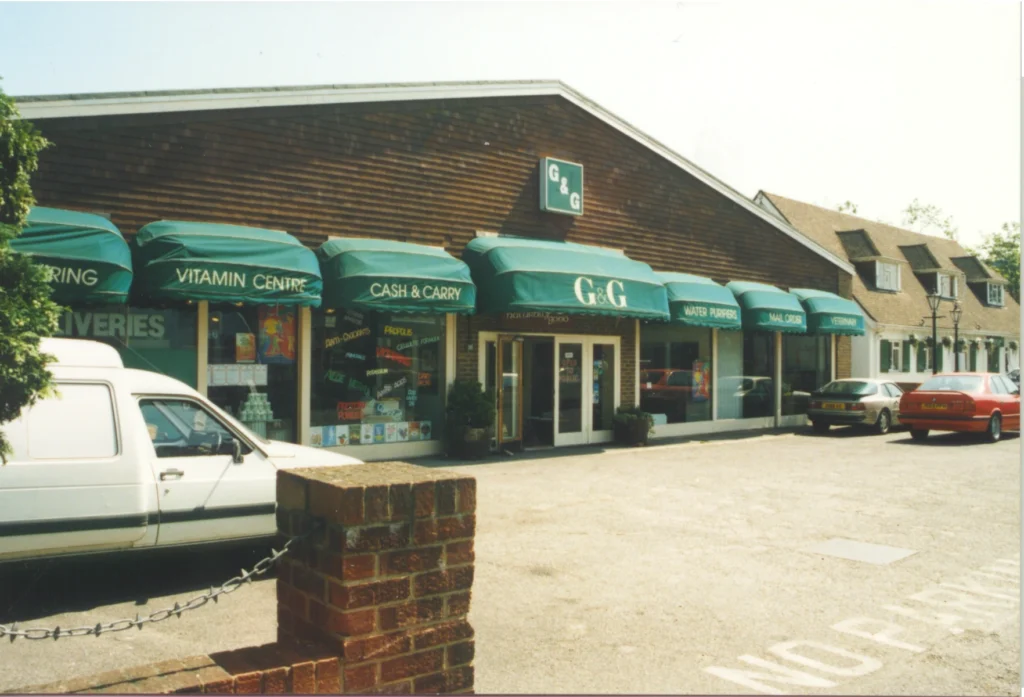
In 1992, G&G moved to its current site in Felbridge. With around 30,000 square feet, the site was large enough to facilitate expansion for the years to come.
Want to sell your own supplements?
Into the Present
The same family still owns G&G today. David sadly passed away, but his children and grandchildren still run the company. We make all our supplements using the now well perfected TruFil® system. Our Felbridge site has a full modern clean room, a second under construction and our administrative spaces have been refurbished to provide clean modern office space for our 100 staff.
G&G is rightly proud of its rich history, and the profound effects we have had on the supplement industry throughout its growth. Our innovation has had a notable effect on supplement manufacture and we plan on staying inventive. If you would like your product manufactured by us please contact us today.